
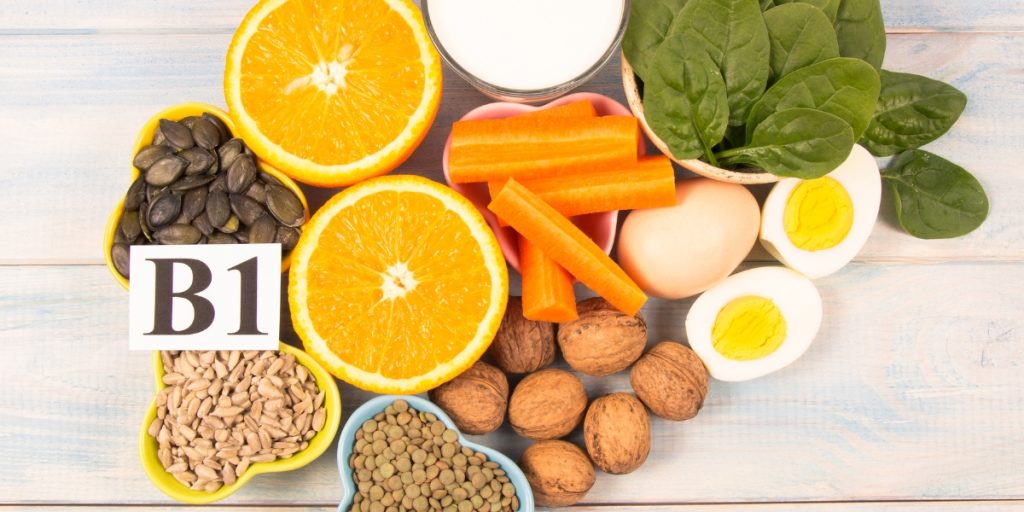
Thiamine — Vitamin B1
If you’re living with alcohol use disorder, rebuilding your thiamine (vitamin B1) stores is one of the most important things to do before you stop drinking. Without enough of it, the risk of serious — and sometimes permanent — brain damage rises sharply. Thiamine protects your brain through withdrawal, which is why it’s a foundational part of any safe, medically supervised detox. It’s also one of the very first steps we take to prepare your body before withdrawal begins.
The link between alcohol and thiamine deficiency
Up to 80% of people with chronic alcohol use become thiamine deficient, and the rates climb with more severe dependence. There are four reasons for this: alcohol reduces how much thiamine your gut can absorb; heavy drinking often goes hand in hand with poor nutrition; alcohol interferes with the liver’s ability to store thiamine; and it blocks the body from converting thiamine into its active form. That’s why topping up thiamine matters before, during and after detox.
Why you can’t rush into a detox
We typically schedule a detox a week or two after your initial medical assessment, and that gap is deliberate. It gives your body time to rebuild its thiamine stores before the demands of withdrawal begin. Your doctor will give you a personalised plan to follow in the meantime, which protects your brain and nervous system and gives you the best chance of a safe recovery.
This is also why going it alone is so risky: attempting withdrawal without enough thiamine on board can cause permanent brain and neurological damage. Stopping “cold turkey” without medical support can be extremely dangerous.
The dangers of untreated deficiency
Some effects of thiamine deficiency can be reversed with proper treatment, but full recovery can take anywhere from 3 to 12 months, and in severe cases, some neurological damage can be permanent.
Warning Signs to Watch For
It helps to know the signs your thiamine may be running low:
- Loss of appetite
- Persistent fatigue
- Mood changes including irritability
- Pins and needles sensations or numbness in your hands or feet
- Problems with your vision or blurred eyesight
- Nausea or vomiting
- Confusion or disorientation
If you experience these signs, seek medical attention urgently.
Serious complications
Left untreated, thiamine deficiency can progress to life-threatening conditions:
Beriberi, which takes two forms: wet beriberi affects the cardiovascular system and can lead to heart failure, while dry beriberi damages the nerves and can cause muscle paralysis.
Wernicke-Korsakoff syndrome, a severe neurological disorder with two stages: Wernicke encephalopathy (acute confusion, abnormal eye movements and loss of coordination) and Korsakoff psychosis (serious memory loss, an inability to form new memories, and confabulation). Without adequate thiamine before and during detox, the risk of these rises significantly, and in severe cases they can result in permanent disability or death.
Thiamine supplementation: what to know
Australian clinical guidelines tailor thiamine treatment to your situation. In plain terms:
If you have been drinking heavily for a long time, have poor nutrition, or have had thiamine deficiency before:
- If you’ve been drinking heavily for a long time, have poor nutrition, or have had thiamine deficiency before, your doctor will usually begin with stronger treatment, often an injection or IV for a few days, before moving you onto a daily supplement for several months.
- If you drink regularly but don’t have those risk factors, a daily supplement while you’re still drinking is generally recommended.
- Ahead of a detox with us, we’ll prescribe a personalised dose based on your medical assessment.
These amounts are much higher than the roughly 1.2mg an average adult needs each day, because alcohol stops your body absorbing and using thiamine properly. And because thiamine is water-soluble, your body can’t stockpile it — which is why taking it consistently matters so much. Your doctor sets the exact dose; it’s not something to self-manage.
Food sources of thiamine
Diet alone usually isn’t enough to restore levels for someone with alcohol use disorder, but it still helps to know where thiamine comes from. Good sources include wholegrains and fortified cereals, breads, pasta and rice; lean pork; legumes like black beans, navy beans and lentils; nutritional yeast and sunflower seeds. You’ll also find useful amounts in fish (trout, tuna, mackerel), nuts, seeds, red meat, eggs, and dairy such as milk and yoghurt. For people in recovery, though, medical-grade supplements are needed to restore levels quickly (Alcohol and Drug Foundation of Australia).
How we help protect your brain
If you drink regularly, or you’re thinking about a detox, speaking with a doctor is essential. Our service provides a comprehensive medical assessment, a personalised thiamine plan, monitoring for any signs of neurological complications, and a structured, safe detox built around you. And even if you’re not ready to stop drinking yet, it’s worth talking to us or your GP about starting thiamine early. It’s a simple step that can prevent serious harm.
Protect your brain before you start
Taking vitamin B1 before a detox makes a real difference to both the safety of withdrawal and your long-term brain health. At AIR, our medical team assesses each person’s nutritional status and ensures thiamine is properly restored before detox begins — one of the many ways we look after both your immediate safety and your longer-term recovery.
Never try to stop heavy drinking suddenly without proper medical supervision and adequate thiamine. If you or someone you care about is thinking about stopping or cutting down, get in touch for safe, medically supervised support across Australia.
Updated 10 June 2026
References
- Marsha Y Morgan, Alcohol and Nutrition, British Medical Bulletin, Volume 38, Issue 1, 1982, Pages 21–30, https://doi.org/10.1093/oxfordjournals.bmb.a071727
- Marel, C., Sunderland, M., Mills, K. L., Slade, T., Teesson, M., & Chapman, C. (2019). Conditional probabilities of substance use disorders and associated risk factors: Progression from first use to use disorder on alcohol, cannabis, stimulants, sedatives and opioids. Drug and alcohol dependence, 194, 136–142. https://doi.org/10.1016/j.drugalcdep.2018.10.010
- McLean, C., Ivers, R., Antony, A., & McMahon, A.-T. (2024). Malnutrition, nutritional deficiency and alcohol: A guide for general practice. Australian Journal of General Practice, 53(4), 173–178. https://www1.racgp.org.au/ajgp/2024/april/malnutrition-nutritional-deficiency-and-alcohol
- Haber PS, Riordan BC (2021). Guidelines for the Treatment of Alcohol Problems (4th edition). Sydney: Specialty of Addiction Medicine, Faculty of Medicine and Health, The University of Sydney https://alcoholtreatmentguidelines.com.au/pdf/guidelines-for-the-treatment-of-alcohol-problems.pdf
- Alcohol and Drug Foundation. (2021). Alcohol-related thiamine deficiency. https://adf.org.au/insights/alcohol-related-thiamine-deficiency/
- WA Country Health Service. (2019). Administration of thiamine in chronic alcohol abuse guideline – Albany Health Campus. Government of Western Australia. https://www.wacountry.health.wa.gov.au/~/media/WACHS/Documents/About-us/Policies/Administration-of-Thiamine-in-Chronic-Alcohol-Abuse-Guideline—Albany-Health-Campus.pdf
- NSW Ministry of Health. (2022). Clinical guidance for withdrawal management of alcohol and other drugs. https://www.health.nsw.gov.au/aod/professionals/Publications/clinical-guidance-withdrawal-alcohol-and-other-drugs.pdf.
Published: 10 June 2026